Quick Facts
- Route: East Ridge, the standard route, is the usual winter route
- Distance: 6.75 miles round trip, about 3,450 ft of gain
- Summit: 14,272 ft
- Winter gear: Microspikes, snowshoes after storms, insulated layers, goggles, mittens
- Avalanche: Avoid possible avalanche terrain between 11,800 and 13,000 ft; check the CAIC forecast
- Parking: Free, first-come, first-served outside the summer reservation season
When the summer crowds disappear and the Tenmile Range turns white, Quandary Peak becomes a completely different mountain. Winter hiking Quandary Peak is one of the most popular ways to step into cold-weather mountaineering in Colorado, and for good reason: the standard East Ridge route is straightforward, the trailhead is only about 8 miles south of Breckenridge, and with good route choices you can steer clear of most avalanche terrain.
Avoidable is not the same as absent, though. Winter turns a busy summer trail into a serious alpine outing with wind, short days and real cold. If you already read my summer guide to hiking Quandary Peak, think of this as the cold-weather sequel: what changes, what to bring, and how to decide whether today is the day.
Why Quandary Peak Is a Good First Winter 14er
Plenty of Colorado 14ers are off the table in winter because their access roads close or their routes cross avalanche terrain. Quandary avoids most of those problems:
- Road access. The trailhead is about 8 miles south of Breckenridge off Highway 9, up Blue Lakes Road (County Road 850), so you aren’t adding miles of snowy road walking like you would on many other peaks.
- A ridge route. The East Ridge follows a broad ridge crest, and 14ers.com rates its exposure, rockfall and route-finding as low. Its winter notes flag possible avalanche terrain between 11,800′ and 13,000′ for you to steer around.
- Traffic. Quandary is popular year-round, so the trail is often packed down after storms, which makes snowshoes optional on many days.
That combination makes it a natural step up if you’ve done summer 14ers like Quandary or Mount Democrat and want to try one in winter conditions.
The Route: East Ridge in Winter
According to 14ers.com, the standard East Ridge route is 6.75 miles round trip with 3,450 feet of elevation gain from the 10,850-foot trailhead to the 14,272-foot summit. In winter, plan for it to take noticeably longer than in summer. Deep snow, breaking trail and layering stops all add time.
Below treeline. The first stretch climbs through forest. After fresh snow this is where snowshoes earn their keep; on a packed trail, microspikes are usually enough.
Treeline to the upper ridge. Once you leave the trees, the wind takes over. Snow is often scoured off the ridge, leaving a mix of rock, hard snow and ice. This is where you want your face covered and your goggles on before you need them.
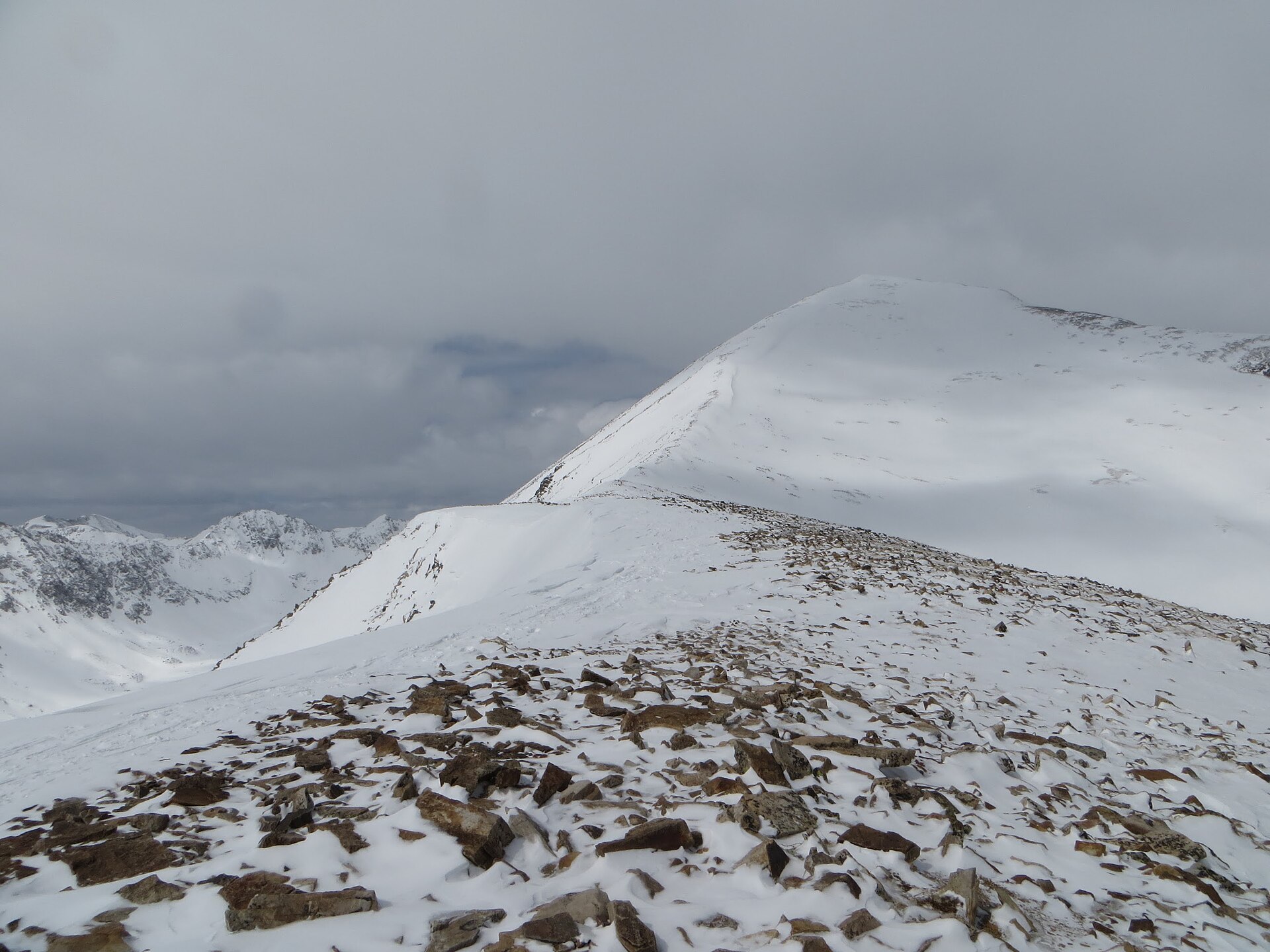
The final push. The last stretch steepens up the ridge to the summit. It is a slow, steady grind at altitude, so pace yourself and keep checking the time against your turnaround point.
Descending. Most winter trouble happens on the way down, when you’re tired and conditions have changed. Follow the same route down and resist shortcuts off the ridge, especially toward the steeper slopes on the north and south sides.
Winter Gear Checklist
Summer 14er gear won’t cut it. Here’s what I’d consider the baseline for winter hiking Quandary Peak:
Some links in this guide are affiliate links. If you buy through them, I may earn a small commission at no extra cost to you. As an Amazon Associate I earn from qualifying purchases.
Traction and flotation
- Microspikes for packed snow and ice
- Snowshoes for fresh or unconsolidated snow (check recent trip reports)
- Trekking poles with snow baskets
Layers
- Moisture-wicking base layer (no cotton)
- Fleece or synthetic mid layer
- Insulated puffy jacket for breaks and the summit
- Waterproof, windproof shell jacket and pants
Extremities
- Insulated, waterproof boots and warm socks (plus a spare pair), and gaiters to keep snow out
- Liner gloves plus insulated mittens, and hand warmers for cold fingers
- Warm hat, balaclava or buff
- Ski goggles and sunglasses (snow glare is intense)
Safety and essentials
- Navigation: a topographic map, onX Backcountry or another phone app with offline maps, and a backup battery kept warm in an inside pocket
- Headlamp, even if you plan to finish in daylight
- Insulated water bottle or a bottle stored upside down so the lid doesn’t freeze
- High-calorie snacks that won’t freeze solid
- Sunscreen and lip balm with SPF
- Avalanche gear and the training to use it if your route or conditions call for it
Avalanche and Weather Safety
Before every winter outing, check the Colorado Avalanche Information Center (CAIC) forecast for the Summit County zone and a mountain-specific weather forecast. A few rules worth sticking to:
- Stay on the standard route. 14ers.com warns of possible avalanche terrain between 11,800′ and 13,000′. Stick to the established winter track and stay off loaded slopes on either side of the ridge.
- Watch the wind. Strong winds make the ridge dangerous, both from cold and from losing your footing. If the forecast shows high gusts above treeline, pick another day.
- Set a turnaround time and keep it. Winter days are short. Decide before you start when you’ll turn around, whether or not you’ve reached the summit.
- Know the signs of frostbite and hypothermia. Numb, white skin, uncontrolled shivering, confusion or clumsiness are all reasons to head down immediately.
- Tell someone your plan. Share your route and expected return time with someone at home, and consider carrying a satellite messenger.
If you’re new to avalanche terrain, consider taking an avalanche awareness course this season. Even on a “safer” route, it changes how you read the mountain.
Parking, Timing and Logistics
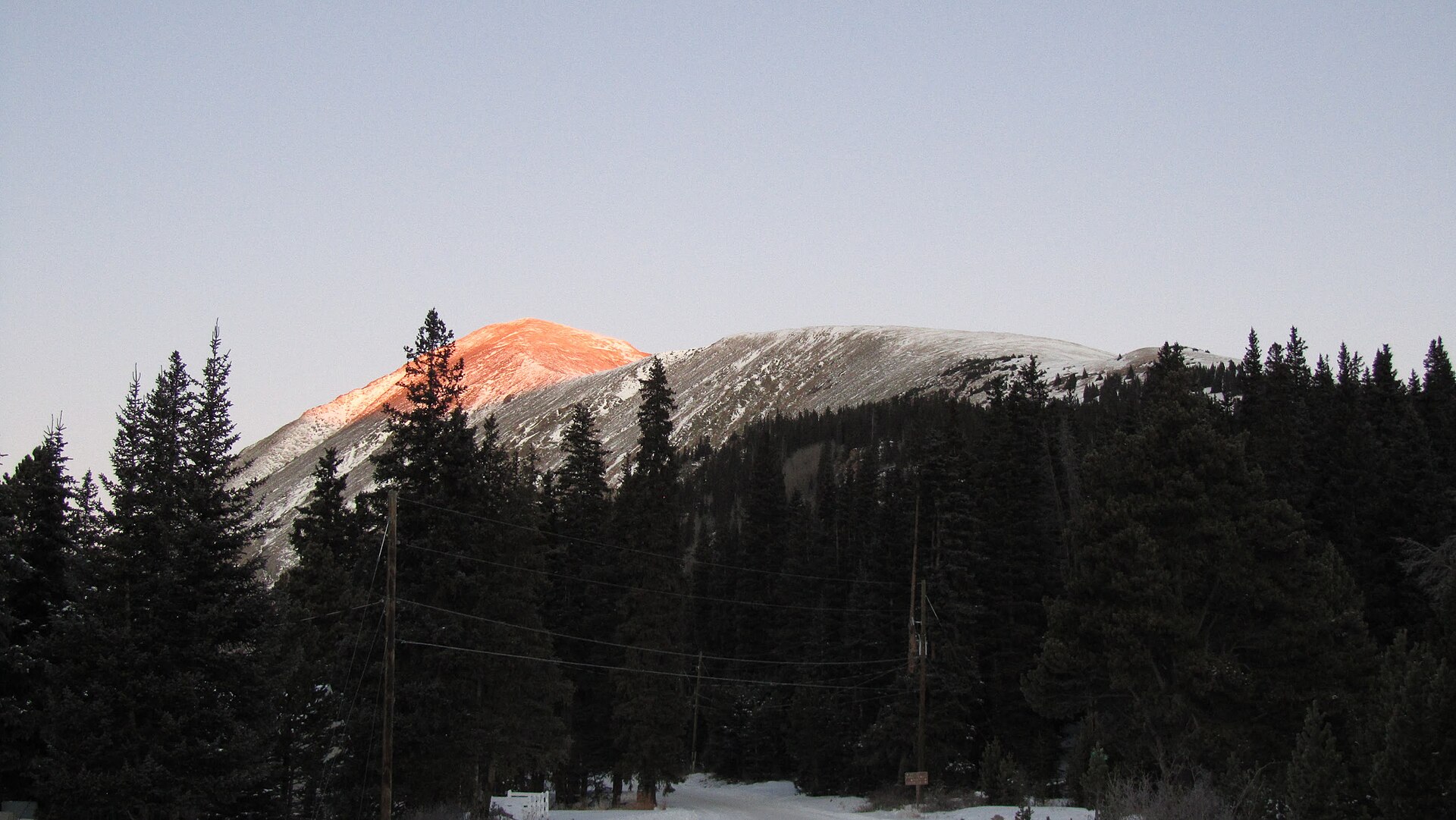
- Start early. Aim to be moving at or before sunrise so you have a big daylight buffer.
- Parking is easier in winter. Summit County only requires paid parking reservations at the Quandary trailhead in summer (June 13 to September 13 in 2026). Outside that window, parking is free and first-come, first-served. Parking on county roads is never allowed, so have a backup plan if the lot is full, and check the county’s Quandary Peak page for current rules.
- Watch the drive. I-70 and Highway 9 (including Hoosier Pass if you’re coming from the south) can be slow or closed in storms, so check road conditions and allow extra time.
- Acclimatize. If you’re coming from low elevation, spend a night or two in Breckenridge or nearby first. Altitude sickness is just as real in winter, and cold makes it harder to notice.
Is Winter Quandary Right for You?
Winter hiking Quandary Peak is one of the best ways to get a taste of winter mountaineering in Colorado without jumping straight into technical terrain. Go in prepared, check the avalanche and weather forecasts, and be honest with yourself about conditions on the day. The summit will still be there next weekend.
Planning your first winter 14er? Drop your questions in the comments, and check out my guides to Quandary Peak in summer and Mount Democrat to start building your 14er list.